Figma import looks cropped? Match your After Effects composition size
Figma to After Effects
4 min read
What you’ll learn
New comp uses Figma dimensions but inherits After Effects frame rate and duration.
Create frame from comp creates a matching canvas, not an animated composition export.
Send selection targets the open composition; New comp always creates separate compositions.
Match your Figma frame and After Effects composition size to correct cropped, oversized, or misplaced screens.
You will: Match canvas dimensions and verify the imported screen’s placement.
Prerequisites: macOS or Windows, MotionUI app, Figma file, After Effects project
How do you match the design and animation canvas?
Step 1: Open MotionUI and prepare the connections
Open the MotionUI app and access plugin setup from the app. Then run the MotionUI plugin in your Figma file and open the MotionUI panel in After Effects. Keep the MotionUI app running throughout the transfer.
MotionUI is a desktop app for macOS and Windows by HIVER connecting Figma, After Effects, Claude Code and Codex. Your connected agent can control Figma and After Effects, but this direct import workflow doesn’t require an AI agent.
Expected result: Your source Figma file and After Effects project are ready for a direct transfer through MotionUI.
Step 2: Choose which canvas determines the size
Decide whether the existing After Effects composition or the Figma frame defines your scene. For an existing animation canvas, start from the composition. For a separate scene matching your design, start from the Figma frame.
Action | Destination | Known size or timing behavior |
|---|---|---|
Create frame from comp | New Figma frame on the linked page | Uses active After Effects composition dimensions |
New comp | New After Effects compositions | Size comes from Figma frames; frame rate and duration come from the active composition, or latest composition if none is active |
Send selection | Open After Effects composition, or a composition created from the frame when none is open | Adds the selection to the open composition when one exists |
Expected result: You’ve chosen the destination before importing. There’s no separate new, empty, or active target selector to configure.
Tip: Choose the canvas deliberately. Matching dimensions does not establish automatic viewport fitting or responsive layout behavior.
Step 3: Check the source frame and target dimensions
Select the intended screen frame in Figma and inspect its width and height. Confirm you’ve selected the screen itself rather than a nested component or a larger frame containing several screens. In After Effects, open the intended destination and inspect its composition dimensions.
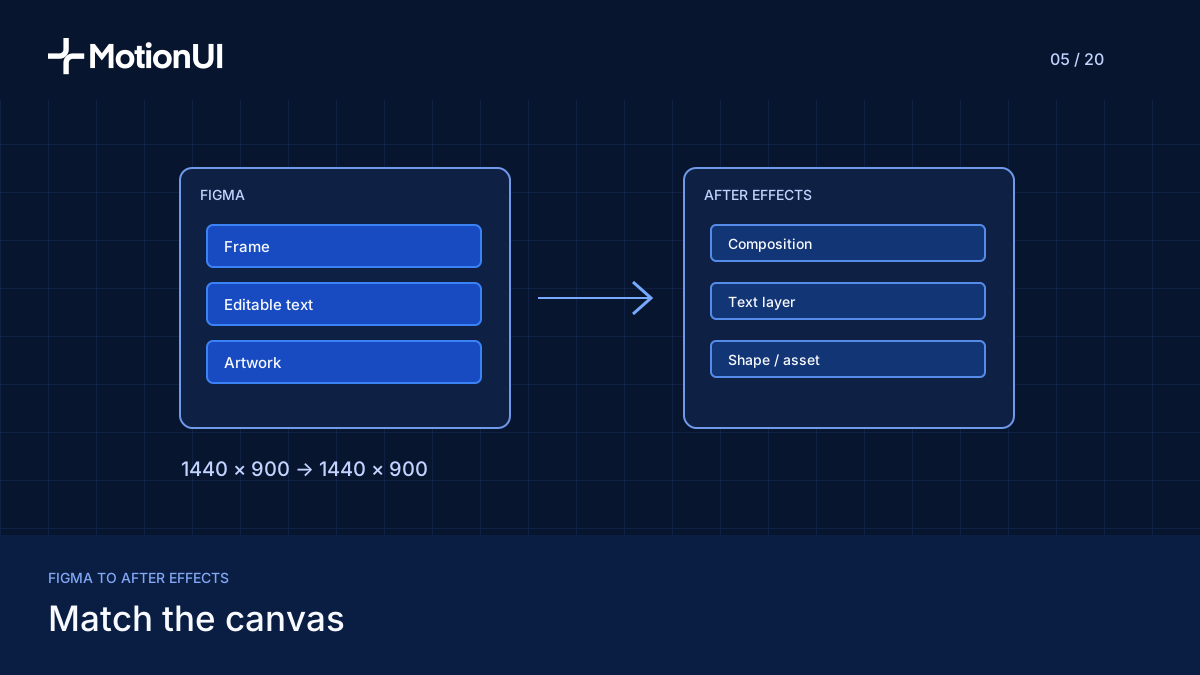
For an illustrative 1440 by 900 example, use a Figma screen frame that is 1440 pixels wide and 900 pixels high. If your goal is a matching canvas, verify that the destination composition also uses 1440 by 900 before sending the design.
If the target is intentionally smaller, decide whether to resize the composition or scale the artwork after import. If its proportions differ, decide whether you want margins, cropping, or a revised layout.
Expected result: You know whether the mismatch begins with the source frame or the destination canvas.
Step 4: Create a matching Figma frame when After Effects leads
When the After Effects canvas is already established, open that composition. Run the MotionUI plugin in the destination Figma file, open the Figma tab of the After Effects panel, and click Create frame from comp.
MotionUI creates a frame on the linked Figma page using the active composition’s dimensions. Figma may come to the foreground. Continue designing in that frame, then import it using the next step.
Expected result: A matching starting canvas in Figma. This action doesn’t export the animated composition. See Create a Figma frame from an After Effects comp.
Step 5: Import into the intended composition
To add the design to an existing scene, open the destination composition, select the source frame in Figma, and click Send selection. You can also trigger it from the Figma tab of the After Effects panel. Check Recent imports in the MotionUI app while the selection is read and built.
To create a separate scene, select your source frame or frames and click New comp in the Figma plugin. Set your desired timing in After Effects beforehand, then review the imported composition’s dimensions, frame rate, and duration.
Expected result: The design enters the chosen scene. Follow the Send selection instructions or New comp size and timing guide for the relevant route.
Step 6: Verify scale and placement before animating
Compare the imported screen against the source frame. Check its outer edges and recognizable layout landmarks, such as the header and sidebar. Inspect the imported layers’ scale and position, including any parent transforms, before making adjustments.
In the illustrative matching-canvas example, check that the whole screen occupies the intended canvas area. If the dimensions agree but the artwork looks oversized, investigate transforms before resizing the composition again.
Expected result: The screen has the intended visible bounds and placement, ready for animation.
Troubleshooting: What should you check if the screen still looks wrong?
Cropped screen: Recheck the selected Figma frame and target dimensions. Correct an unintended canvas mismatch before adjusting individual layers.
Oversized artwork: Inspect layer scale and parent transforms. Adjust the intended screen as a coordinated layout rather than shrinking unrelated elements independently.
Misplaced screen: Confirm the destination composition, then inspect position and parent transforms. Compare placement against the source frame’s edges.
Unexpected scene or timing: Use Send selection with the destination open for an existing scene. For New comp, review the composition supplying frame rate and duration before importing.
Need to set up the app first? Follow the MotionUI setup guide for Mac and Windows.

Connect Figma, After Effects and Claude. Made by HIVER.